

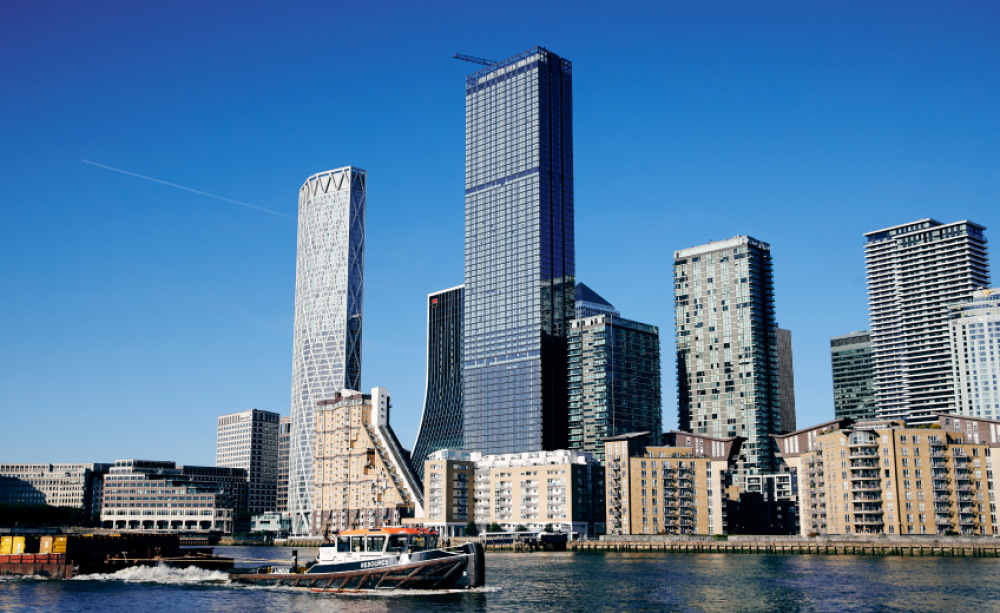
What is the London strategic heat main?
The London Strategic Heat Main is the UK’s first large-scale heat transmission system – infrastructure which has existed for decades across Europe and Asia. It will transport surplus low-carbon heat, initially from Cory’s facilities at the Riverside campus in Belvedere, Bexley to local heat distribution networks across London that will provide heating and hot water to homes and businesses.
The London Strategic Heat Main is a project of national significance that aims to provide London with energy that is secure, affordable, clean and local.
How will the London Strategic Heat Main work?
The heat transmission main will capture surplus heat from industrial sources – initially Cory’s energy from waste (EfW) facilities at the Riverside campus in Belvedere - which would otherwise be lost. This heat will be transported via underground pipework, acting as a ‘trunk’ to serve areas of high heat demand in London. At various points along the heat transmission main, local heat distribution networks will be able to connect and heat will be transferred to homes and businesses.
Heat distribution networks are made up of smaller pipes, carrying hot water from a central energy source directly to homes and businesses, providing heating and hot water without the need for individual gas boilers in each building. Similar to the motorway network, the London Strategic Heat Main will move large amounts of heat quickly, over a long distance. The heat distribution networks then act as the local road network, connecting heat directly to homes and businesses.
Currently, homes and businesses across London and the UK are principally heated by burning gas. To meet policy goals of decarbonisation, energy security and consumer protection from international price shocks, a major expansion of district heating is planned in UK urban centres.
Central London has a large and dense heat load which makes it particularly well suited to district heating; however, the largest and most suitable sources of waste heat are located around the edges of London. Heat transmission infrastructure is therefore required to bring waste heat from where it is generated, to where it is needed, connecting via the district heat networks.
As summers become hotter, studies are also underway to examine if the London Strategic Heat Main could also provide city level cooling – via absorption heat pumps – as in Abu Dhabi and Paris.

Where will it be located?
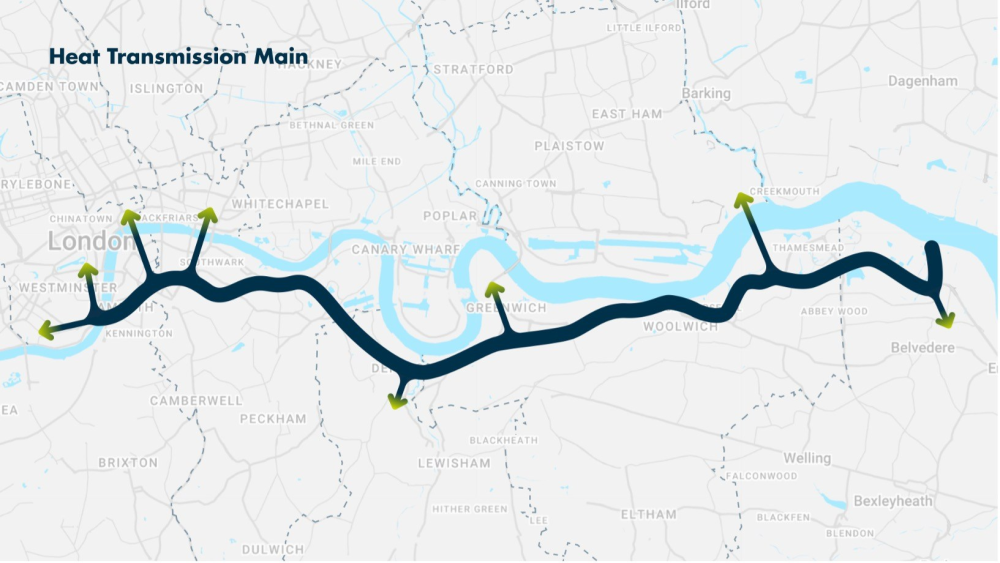
The London Strategic Heat Main is a linear project that will transfer heat from sources on the Thames estuary - initially Cory’s energy from waste (EfW) facilities in Belvedere - to areas of high demand across central and east London. At this early stage of the project, the trunk main is over 20km long and will provide heat to 11 London boroughs.
What are the benefits of the project?

Secure Energy
The London Strategic Heat Main will help to protect Londoners from the volatility of international fossil fuel markets.

Clean Energy
Under the UK Government carbon metrics, the initial source of heat gives a c.95% carbon reduction against gas, and a c.40% carbon reduction against heat pumps.

Affordable Energy
The London Strategic Heat Main is expected to supply heat to local heat networks, below the cost of gas.

Local Energy
The waste heat transported by the London Strategic Heat Main has the potential to supply heat to the equivalent of up to 650,000 London homes.
Projected Timeline
The London Strategic Heat Main is in the early pre-application stage of the Development Consent Order (DCO) process. As more detailed route information becomes available, it will be shared with communities and stakeholders to support informed feedback.
A Development Consent Order (DCO) is a legislative document gained under the Planning Act 2008 that provides planning permission and other related powers for nationally significant infrastructure projects, which are large-scale developments relating to energy, transport, water and waste. DCO applications are submitted to the Planning Inspectorate, which appoints an Examining Authority to examine applications. Following examination, the Examining Authority makes a recommendation to the relevant Secretary of State on whether development consent is to be granted. The Secretary of State for Energy Security and Net Zero will make the final decision on whether to grant the DCO application for the London Strategic Heat Main.
Need to get in touch?
We're happy to answer your queries - visit our contact page to get in touch.