The story so far
Heating in London
Following the 1970s oil crisis, many cities in Europe began to build large scale district heating networks. These systems used insulated pipes to carry hot water from central heat sources into buildings across neighbourhoods or even entire cities.
Around the world, district heating is a proven and widely-used way of supplying heat. Cities including Copenhagen, Stockholm, Amsterdam, Berlin and Vienna, use long range strategic heat mains to transport heat from waste heat sources to city centres. Similar systems operate across Asia, including in cities such as Seoul and Beijing, with new heat mains stretching over 100km now under construction in China.
In hotter cities like Singapore, district cooling is also common. Although it may seem counterintuitive, waste heat sources can also be used to generate this cooling, as is the case in Abu Dhabi. As summers become hotter, district cooling is increasingly common in European cities, for instance in Paris, and is even incorporated in local London redevelopments, such as at Battersea Power Station, the Olympic Park and Kings Cross.
So why is district heating not more common in London? The answer is gas. In the 1970s, major natural gas reserves were discovered under the North Sea. As the oil crisis hit the UK rolled out North Sea gas infrastructure nationwide, converting millions of homes away from coal. For decades this provided cheap, secure heating to millions of Londoners.
In 2022 another crisis showed times had changed. When Russia invaded Ukraine, international gas prices – and UK heating bills – soared. In Denmark, consumers on heat networks were comparatively sheltered, prompting a renewed focus on connecting more homes and businesses.
Gas provided secure, cheap, and comparatively clean heat in the 1970s. Today's geopolitics, dwindling North Sea gas supplies, and higher expectations for clean energy, have undermined this logic. Large scale district heating – using strategic sources of waste heat such as energy-from-waste, data centres and wastewater treatment plants – offers the UK the next generation of cheap, secure, and clean heat. The UK Government has identified heat networks as an important part of the country’s future heating system, with a goal of increasing the proportion of heat provided by heat networks from 3% today to 20% in 2050.
Cities across the UK have begun to scale up this infrastructure. For instance, in Leeds, a network started in 2018 now takes waste heat from an energy from waste plant through over 30km of pipework, supplying over 4,000 homes and over 30 major public buildings, including St James's Hospital, Leeds Beckett University and the Town Hall. Ongoing major expansion is planned.
In London, studies commissioned by the Greater London Authority (GLA) and the latest infrastructure plans from the Mayor of London and London Councils (a body representing London local authorities from multiple political parties) have identified the use of strategic heat sources, with strategic heat mains and district heating, as the future infrastructure London needs.
The London Strategic Heat Main (London SHM) is being promoted to meet that strategy and need, and will be the first large scale heat transmission system in the UK. The project is led by Cory, working with the GLA, Local Authorities along the project route, the UK's leading heat network developers (which would take heat from the London SHM into local networks), and national bodies including the Department for Energy Security and Net Zero, Ofgem, the National Energy System Operator (NESO) and others.
Who are Cory?
Cory is one of the UK's leading recycling and waste management companies. We contribute to London and the South East having a safe, clean and sustainable way of managing its recyclable and non-recyclable waste, using our unique river-based infrastructure.
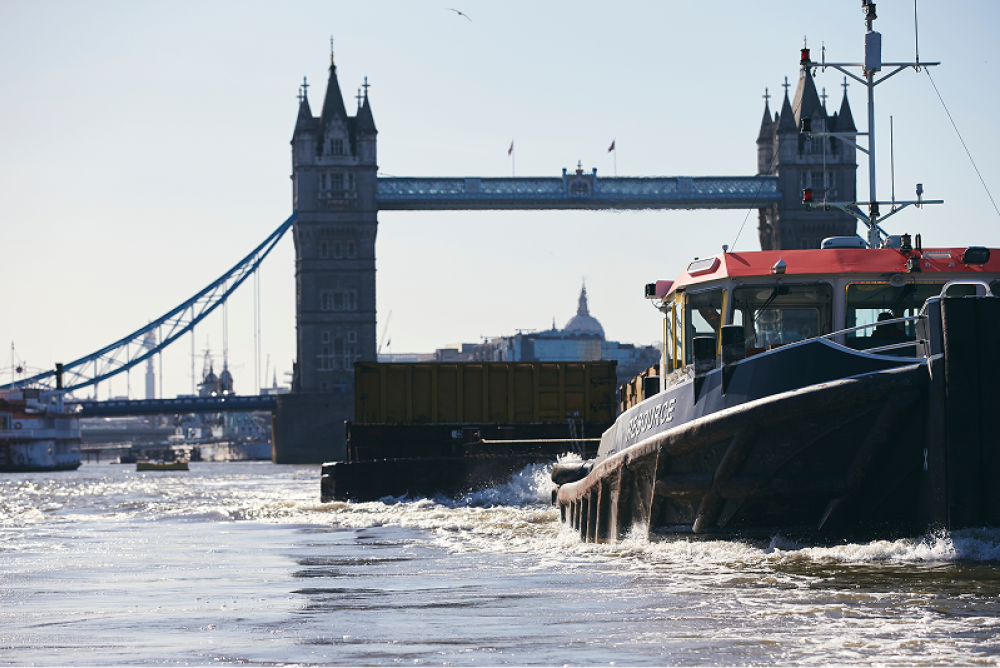
For over 200 years, Cory has supported London’s growth through river-based infrastructure. With origins in barging coal, Cory diversified to ocean cable laying, logistics and waste in the 19th century. The company played its part in both world wars, and helped to quarry and barge materials into London to rebuild the city after 1945. Today, Cory operates a large recycling facility, waste transfer stations and shipyards at strategic locations along the Thames, as well as Riverside, one of the world's largest energy from waste campuses.
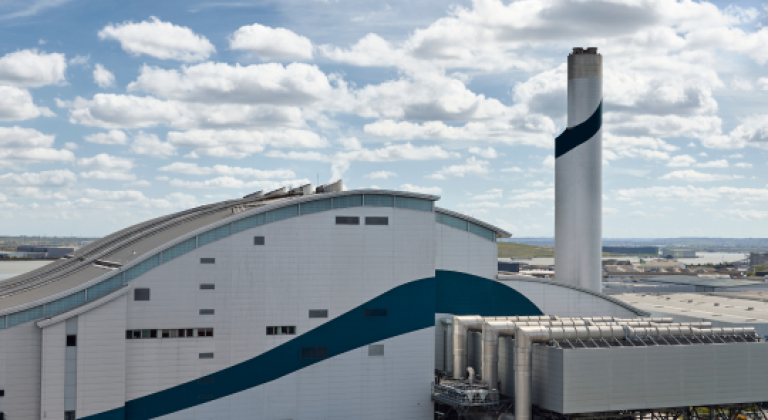
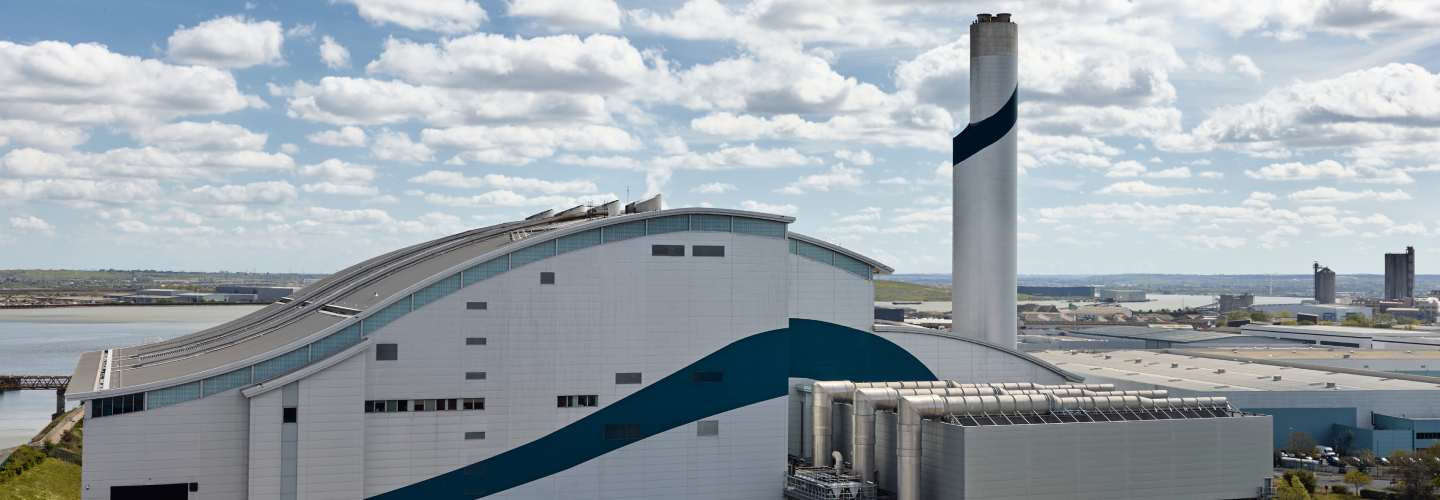
Riverside 1, operating since 2012, processes around 800,000 tonnes of residual waste a year – enough to fill St Paul's Cathedral 12 times. Alongside it, a second EfW facility, Riverside 2, is entering operation in 2026. We use the River Thames to transport residual waste to the Riverside Campus and export the post-combustion incinerator bottom ash as building material, taking over 100,000 vehicle movements off London's roads each year.
Our EfW facilities ensure that more of the residual waste generated within London and South East England will not end up in landfill or be exported overseas. Together, Riverside 1 and Riverside 2 will be able to process more than 1.5 million tonnes of non-recyclable waste a year, providing enough partially renewable baseload electricity to power over 370,000 homes.
In 2025, Cory's carbon capture and storage (CCS) project was granted development consent by the Secretary of State. This project will install carbon capture technology at the Riverside Campus; once captured, the carbon dioxide will be transported by ship along the River Thames to a safe storage site in the North Sea. The CCS project can also provide a complementary source of heat in addition to Riverside 1 and 2.
To find out more about us, please visit our main Cory website.
Meet the team

David Carter

Richard Wilkinson

Rodrigo Matabuena

Nicholas Spicer

Kirsten Berry

Caroline Dobbin
Need to get in touch?
We're happy to answer your queries - visit our contact page to get in touch.